Jagannath Yatra 2026: History, Significance, Rath Yatra in Varanasi & Complete Travel Guide
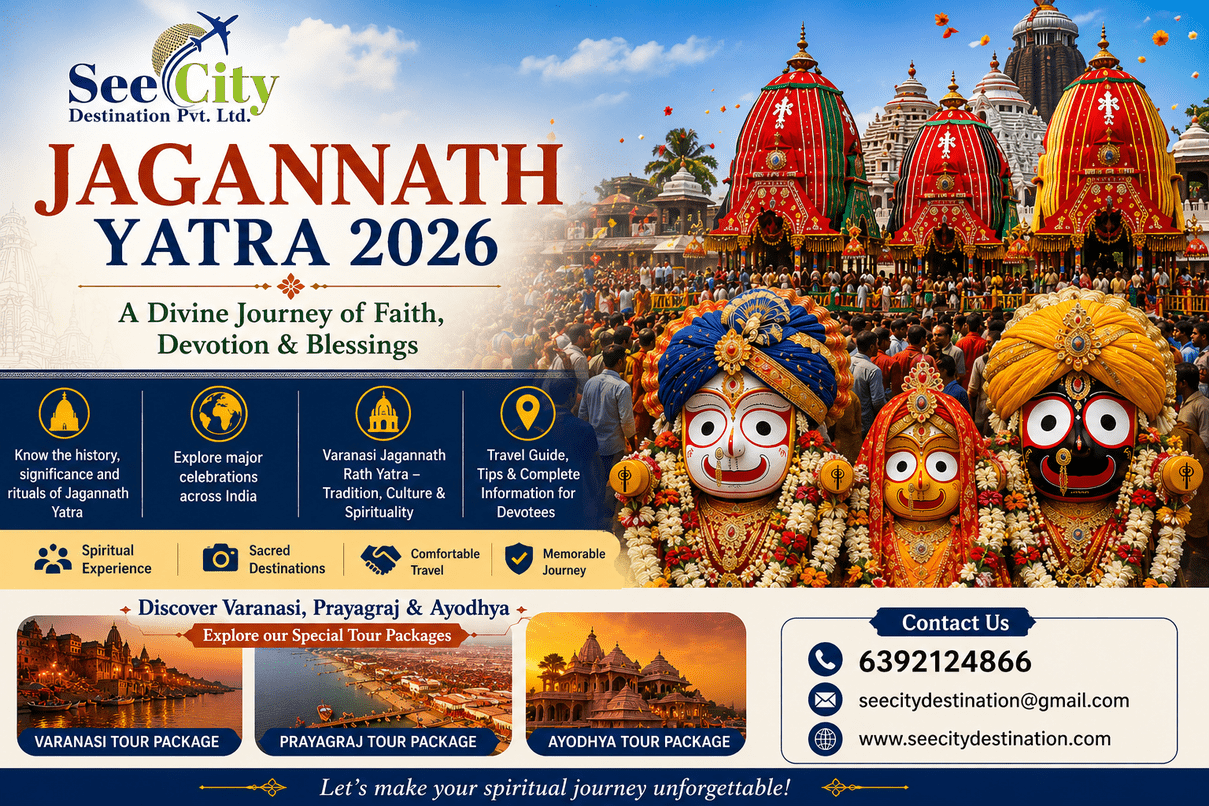
Jagannath Yatra 2026: Complete Guide to History, Significance, Rituals, Chariots, Celebrations in India & the Spiritual Importance of Varanasi
Introduction:
Jagannath Yatra – A Journey of Faith, Devotion and Divine Blessings
India is home to countless spiritual festivals, but few match the grandeur and devotion of Jagannath Yatra. Every year, millions of devotees gather to witness Lord Jagannath, Lord Balabhadra, and Goddess Subhadra leave their temple in magnificent wooden chariots to bless humanity.
Unlike most temple festivals where devotees visit the deity, Jagannath Yatra symbolizes the Lord Himself coming out to meet His devotees. This beautiful tradition makes the festival one of the most inclusive and spiritually uplifting celebrations in Hinduism.
Whether you visit the world-famous Puri Rath Yatra or experience the historic Varanasi Jagannath Rath Yatra, the atmosphere is filled with devotion, music, chanting, and cultural heritage.
The History of Jagannath Yatra
The roots of Jagannath Yatra date back more than a thousand years.
The Jagannath Temple in Puri was constructed during the 12th century by King Anantavarman Chodaganga Deva. Since then, the Rath Yatra has become one of the oldest continuously celebrated festivals in India.
According to Hindu tradition, Lord Jagannath travels once every year from His main temple to the Gundicha Temple, which is believed to be the home of His maternal aunt. This symbolic journey reflects divine love, compassion, and the Lord's willingness to leave His palace to bless all people equally.
Over centuries, the tradition spread to several parts of India, including Varanasi, Ahmedabad, Kolkata, Delhi, Mumbai, and many ISKCON temples worldwide.

Who is Lord Jagannath?
Lord Jagannath is worshipped as the universal form of Lord Vishnu and Lord Krishna.
He is accompanied by:
Lord Balabhadra (His elder brother)
Goddess Subhadra (His sister)
Together, they represent divine harmony, compassion, strength, and protection.
The Jagannath Temple in Puri is one of the Char Dham pilgrimage sites, making it one of Hinduism's holiest destinations.
Why is Jagannath Yatra Important in Hinduism?
Jagannath Yatra represents the idea that God belongs to everyone.
Its spiritual significance includes:
The Lord comes out to bless every devotee.
Everyone can pull the sacred chariot regardless of caste or social background.
Participation symbolizes surrender to God.
The festival promotes equality, compassion, and unity.
It reminds devotees that devotion is more important than status or wealth.
Many scriptures describe this festival as one that brings spiritual purification and divine blessings.
The Story Behind Gundicha Temple
One of the most fascinating traditions of Jagannath Yatra is the journey to the Gundicha Temple.
According to tradition, Gundicha Temple represents the home of Lord Jagannath's aunt. The deities stay there for several days before returning to the main temple in the Bahuda Yatra (Return Journey).
Spiritually, this symbolizes God's willingness to leave His royal palace and spend time among His devotees.
The Three Sacred Chariots
One of the biggest attractions of Jagannath Yatra is the construction of three enormous wooden chariots.
Nandighosha
Dedicated to Lord Jagannath
16 Wheels
Decorated with red and yellow cloth
Taladhwaja
Dedicated to Lord Balabhadra
14 Wheels
Decorated with green and red cloth
Darpadalana (Devadalana)
Dedicated to Goddess Subhadra
12 Wheels
Decorated with black and red cloth
Every year, these chariots are built from fresh wood by skilled artisans using traditional techniques that have been preserved for centuries.
Major Rituals Before Rath Yatra
Several important rituals take place before the festival begins.
Snana Purnima
The deities receive a ceremonial bath with 108 pots of sacred water.
Anavasara
Following the bath, the deities are believed to fall ill and remain away from public view for about fifteen days.
Netrotsava
The ceremonial reopening of the Lord's eyes takes place before the Rath Yatra begins.

The Grand Rath Yatra
On the day of Rath Yatra:
The deities are brought out of the temple.
Thousands of priests perform rituals.
Millions of devotees gather to witness the procession.
The giant wooden chariots are pulled by devotees using thick ropes.
Devotional chants of "Jai Jagannath" fill the air.
The sight of millions pulling the Rath together is one of the most powerful spiritual experiences in the world.
Bahuda Yatra – The Return Journey
After staying at Gundicha Temple for several days, Lord Jagannath returns to His main temple.
This return procession is known as Bahuda Yatra, marking the completion of the sacred pilgrimage.
Jagannath Yatra Celebrations Across India
Besides Puri, the festival is celebrated in many cities.
Puri, Odisha
The original and largest Rath Yatra in the world.
Varanasi, Uttar Pradesh
Varanasi has one of North India's oldest Jagannath Rath Yatra traditions. The city comes alive with devotional processions, temple rituals, bhajans, and thousands of devotees.
Ahmedabad, Gujarat
One of India's largest Rath Yatras outside Odisha.
Kolkata
Grand celebrations are organized by ISKCON and local temple committees.
Delhi
ISKCON Delhi hosts an impressive Rath Yatra attended by devotees from across the country.
Mumbai
Mumbai celebrates with colorful processions and devotional programs.
Why Visit Varanasi During Jagannath Yatra?
Visiting Varanasi during Jagannath Yatra offers a unique opportunity to experience two spiritual traditions together—the devotion of Lord Jagannath and the timeless heritage of Kashi.
Pilgrims can visit:
Shri Kashi Vishwanath Temple
Kal Bhairav Temple
Sankat Mochan Hanuman Temple
Tulsi Manas Temple
Durga Kund Temple
Dashashwamedh Ghat
Assi Ghat
Sarnath
Ramnagar Fort

Witnessing the evening Ganga Aarti during the festival creates an unforgettable spiritual experience.
Many visitors choose a Varanasi Tour Package during this season to enjoy guided temple visits, local sightseeing, comfortable transportation, and cultural experiences.
Combine Your Spiritual Journey
Many devotees extend their pilgrimage beyond Varanasi.
A popular spiritual circuit includes:
Varanasi
Prayagraj
Ayodhya
A well-planned Varanasi Tour Package, combined with a Prayagraj Tour Package and Ayodhya Tour Package, allows pilgrims to experience the sacred Triveni Sangam, Ram Janmabhoomi, Kashi Vishwanath Temple, Ganga Aarti, and several other holy destinations in one memorable journey.
Travel Tips
Arrive early for the procession.
Book accommodation in advance.
Wear comfortable footwear.
Stay hydrated.
Follow police and festival guidelines.
Respect local customs and temple traditions.
Best Time to Visit
Jagannath Yatra takes place every year during Ashadha Shukla Dwitiya, generally falling in June or July.
This is considered one of the best times to experience India's living spiritual traditions.
Frequently Asked Questions
What is Jagannath Yatra?
Jagannath Yatra is the annual chariot festival of Lord Jagannath, Lord Balabhadra, and Goddess Subhadra.
Why is Jagannath Yatra famous?
It is famous because millions of devotees pull the sacred chariots, symbolizing devotion, equality, and divine blessings.
Which city hosts the largest Jagannath Yatra?
Puri in Odisha hosts the world's largest and most famous Jagannath Rath Yatra.
Is Jagannath Yatra celebrated in Varanasi?
Yes. Varanasi celebrates one of North India's oldest and most respected Jagannath Rath Yatras.
Can tourists attend Jagannath Yatra?
Yes. Both Indian and international visitors can witness the Rath Yatra and enjoy the cultural celebrations while respecting local traditions.
Conclusion
Jagannath Yatra is not only one of India's greatest religious festivals but also a timeless celebration of devotion, unity, and compassion. From the majestic chariots of Puri to the historic streets of Varanasi, the festival inspires millions of devotees every year.
If you are planning a spiritual holiday, Jagannath Yatra is an ideal time to explore the sacred cities of Varanasi, Prayagraj, and Ayodhya. A thoughtfully planned pilgrimage allows you to experience ancient temples, sacred rituals, the mesmerizing Ganga Aarti, and the rich cultural heritage that makes India one of the world's most revered spiritual destinations.

How can I help you?
 Hurry! Fill Form & Get Best Deals